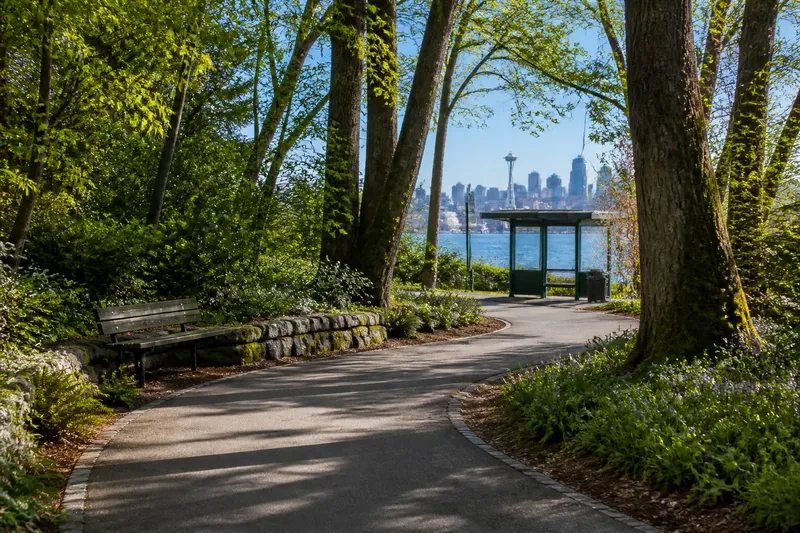
Loop Walk or Out-and-Back: Pick a Route for Your Afternoon
Loop walk or out-and-back? Choose a Seattle park route that suits your appetite for new scenery, simple wayfinding and light afternoon planning.

You leave a Seattle park’s entrance beneath a canopy of trees, follow a path towards a pond, then reach a fork and realise you have not decided whether to circle back or retrace your steps. That small choice shapes the whole walk. A loop walk or out-and-back route can both make a satisfying afternoon; the better fit depends on how much new scenery you want, how comfortably you find your way and how much planning you feel like doing.
In city parks, routes may mingle with shared paths, side entrances, gardens, play areas and streets. Rather than treating one shape as automatically better, use the trouble you want to avoid as a guide. These are the snags that commonly make a pleasant walk feel less settled, and what to try before setting off.
Uncertain about distance
What goes wrong: A loop looks compact on a map, but its bends and branches make it hard to tell how long the walk will feel. An out-and-back seems obvious, yet you may keep going because the return point is still somewhere ahead.
Why it happens: Route shape alone does not tell you how demanding a walk will feel. A broad, smooth path can be comfortable to follow, while a short route with hills, crossings or frequent pauses can take more attention than expected. In a Seattle park, time spent looking at a shoreline, garden or busy junction is part of the outing too.
What to try: Decide on an afternoon-sized time window before choosing a route, then pick a natural point at which to turn or close the loop: a bridge, viewpoint, garden entrance or distinctive meeting of paths. If you want the most direct control over when to head back, an out-and-back makes that decision easy. If you prefer the sense of travelling through different parts of the park, a loop can suit you, provided you are happy to follow its turns.
Leave room for pauses rather than treating a map line as a promise of pace. A bench or patch of water can be a welcome stopping point, not an interruption to the route.
Too much repeated scenery
What goes wrong: The return leg feels dull because the same path, trees and views appear again. This is a common frustration on an out-and-back, especially if the outward walk felt like the main event and the return like a chore.
Why it happens: Walking in one direction can make familiar features seem new: a slope changes what you see, and a turn hides what is behind you. But the route is still shared in both directions. If variety is what you want from a short visit, retracing every step may not provide it.
What to try: Choose an out-and-back when there is a particular destination worth reaching, such as a pond edge, a quiet bench or an open patch with a view. Give the return a small purpose of its own: notice the shapes of the tree trunks, look for garden details you missed, or pause at a different resting place. If fresh surroundings matter more than the simplicity of retracing, choose a loop that uses distinct parts of the park rather than circling the same central lawn.
Say you have a free afternoon and want to see a garden as well as a stretch of waterfront. You could make the garden your out-and-back destination, then enjoy the familiar path home without searching for a new junction. If you would rather keep moving through changing scenery, choose a loop that passes both features and note one clear point where it turns towards the entrance.
Unsure where to turn
What goes wrong: You reach a junction, see several plausible paths and cannot tell which one continues the route. On a loop, a wrong turn can make the intended circuit difficult to recognise. On an out-and-back, you may overlook the path you came by when returning from a different angle.
Why it happens: Park paths are not always marked as a single, continuous walking route. A spur may lead to a play area, garden or street exit; a path that looks like a shortcut may simply meet the main path further along. Familiarity with one entrance does not necessarily make every interior junction easy to read.
What to try: Before leaving the entrance, identify a few landmarks in sequence rather than trying to memorise every turn. A footbridge followed by a garden gate is easier to recognise than a vague instruction to “keep left”. If a map is available at the park entrance, take a moment to look at the shape of the route and note the main exit. A phone map can help, but do not depend on it alone if you would rather keep your walk uncomplicated.
If you meet an unclear fork, pause somewhere out of other people’s way. Look for a familiar landmark, sign or path connection before choosing. When you cannot confidently identify the intended route, returning to a known junction is often simpler than making a string of guesses.
Too much route planning
What goes wrong: Choosing a walk starts to feel like a small navigation project. You compare routes, check several turns and still worry about missing the way back. The planning can take more energy than the outing deserves.
Why it happens: Loops often ask for more decisions in advance: which side of the park to take, where the circuit closes and whether a branching path is part of the plan. That can be enjoyable if you like exploring, but tiring if you have simply stepped out for a break.
What to try: Choose an out-and-back from an entrance you can identify, follow one clear path towards a destination and turn around when you are ready. This keeps the route legible without requiring you to plan every junction. If you still want a loop, make it a simple one with visible landmarks and a clear return to the start, rather than adding side paths for the sake of variety.
Match your planning to your mood. A map glance and one remembered landmark may be enough for a familiar, straightforward walk. A loop through a less familiar part of a large park may deserve a little more attention before you leave.
Want a quick answer?
Is a loop walk better for scenery?
A loop can show you more of a park without retracing the same path, so it often suits a walk where changing surroundings are the point. Its variety depends on the route: a loop around one open space may feel less varied than an out-and-back that leads to a distinct destination.
Is an out-and-back easier to follow?
Often, because you can return along a path you already recognise and choose your turning point as you go. Junctions and alternate entrances can still cause confusion, so note a clear landmark near the start.
Which route should I pick for an unplanned afternoon?
If you want to begin walking with little preparation, an out-and-back towards a visible or memorable destination is a straightforward choice. Choose a familiar loop instead if you already know how it reconnects with your starting point.
Can a loop be made easier to navigate?
Choose a route with a few recognisable landmarks and avoid adding optional branches unless you are comfortable exploring. If the layout becomes unclear, head back to a junction you recognise rather than pressing on in the hope that the path will resolve itself.
When the route changes
What goes wrong: A path is busy, temporarily closed or less comfortable than it looked from the entrance. A planned loop may no longer make sense, while retracing an out-and-back can mean passing the same pinch point again.
Why it happens: Parks are shared places, and the best route can shift with maintenance, events, crowds or your own energy. A fixed plan can be awkward when it leaves no easy alternative.
What to try: Treat your route as a choice, not a commitment. If a path is closed, follow posted directions and choose another public path; if a junction is crowded, pause or take a clearly marked alternative that still makes sense to you. Turn back whenever the remaining walk feels less appealing than the walk home. A smaller outing can be the right choice for that afternoon.
For a Seattle park walk, the useful question is not which shape is best in general, but which one removes the friction you are most likely to notice. Pick an out-and-back for a clear destination and easy turn-around, or a loop for changing scenery when you are content to follow a few more turns. With that preference in mind, the next path choice becomes simpler—and you can give more attention to the place you came to see.