Why a Park Path Feels Different When It Bends
Why a park path feels different when it bends: learn to read changing sightlines, pace and anticipation, and notice how a curve reshapes a familiar walk.
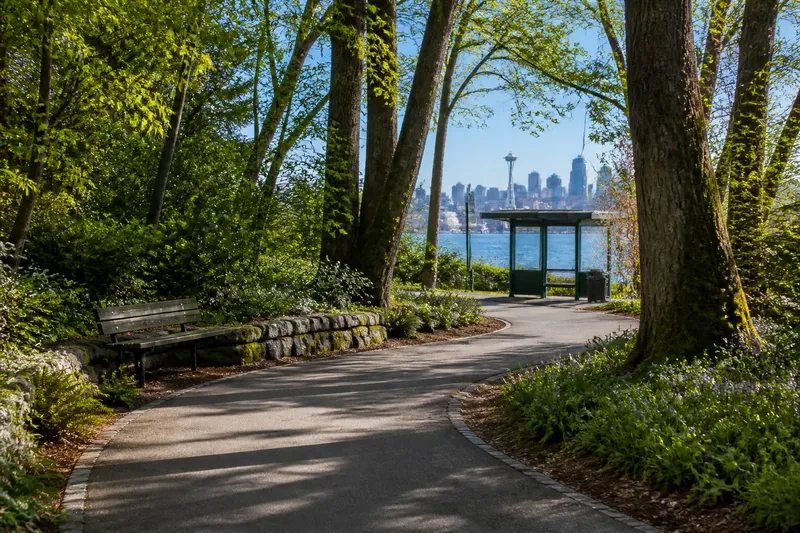
On a straight path through a Seattle park, the next crossing can be visible before you reach it. Turn onto a bend, though, and the view closes around a stand of trees; a bench appears, disappears behind a trunk, then returns as the path swings towards it. Why a park path feels different when it bends has less to do with distance than with what the landscape lets you see, and when.
That small shift changes the walk. A curve parcels out the view, gives the eye something new to meet, and can make an ordinary stretch feel like a sequence rather than a corridor. To see how, imagine one invented visit to a fictional Seattle neighbourhood park. The place and events below are hypothetical, but the observations are easy to try on a path you know.
A familiar park, newly read
Imagine Maya entering a small park after work. She has a few minutes before meeting a friend at a bus stop and chooses a paved route across a lawn. From the entrance, she can see the path run almost straight to a cluster of maples, with the far end plainly in view. She walks at her usual brisk pace, glancing ahead to keep her bearings.
On the return, Maya takes a second path that curves behind the same trees. It is not hidden or difficult to follow: its edge remains clear, and occasional openings show the lawn. But the bend keeps the destination out of sight. She slows at one opening, notices a low stone wall she had not seen from the entrance, then turns and finds the bus stop shelter framed between two trunks.
The route has not become a different park. Maya has changed the order in which she encounters it. The straight line gave her a broad preview; the curve offered partial views, small pauses and a later reveal. That is the useful distinction: a bend changes the timing of attention.
Sightlines in motion
A sightline is simply the view available from a particular position. On a straight path, the eye can often travel along the route and settle on a distant feature: a gate, a bridge, a shelter or a gap in the trees. The path itself acts like an arrow, drawing attention towards that point.
A curving route interrupts the arrow. A hedge, slope or tree trunk may screen what lies beyond the next turn, while the near edge of the path guides the eye around it. As you move, the scene changes by degrees. One view narrows, another opens, and a feature that was hidden can arrive with a sense of discovery.
Try noticing three things rather than judging whether a path is attractive: what you can see from where you stand, what blocks the view, and what becomes visible after a few paces. Seattle parks often combine planted edges, mature trees and changes in ground level, so even a modest curve can make sightlines shift. The same bend may feel open when it crosses a lawn and tucked away when trees gather close beside it.
Look back, too. A view can have a different shape in reverse: the entrance you barely noticed may become a clear landmark, or a tree line may conceal the route you just followed. This is a way to read layout, not a test of whether the park is well designed.
Pace and small pauses
A bend can influence walking pace without demanding a stop. If the route ahead is not fully visible, you may shorten your stride slightly, glance around the curve, or wait until the next opening before choosing where to look. A clear straight path often supports a steady rhythm because its direction is legible at a glance.
These are tendencies, not rules. A broad, smooth curve can feel easy to follow, while a straight route crowded with people or crossed by several entrances may call for careful attention. Notice what your body actually does: do you keep the same pace, look towards the next visible opening, or pause where the view changes?
Maya’s imagined walk makes the difference concrete. On the straight section, she keeps her eyes on the maples and walks without changing pace. On the curving section, she eases up at the screened corner, then resumes once the path and the bus stop come into view. The observable result is not a magical transformation; it is a different rhythm of looking and moving.
Anticipation around corners
When a destination is hidden, the mind can start filling in what might be around the bend. It may be a familiar bench, a patch of lawn, or simply more path. That anticipation can make a short walk feel more eventful because each partial view raises a small question: what is coming into sight?
Pay attention to the difference between anticipation and uncertainty. A route can conceal a destination while still offering clear edges, visible connections and useful landmarks. If the bend leaves you unsure where the path goes, you may focus on finding the route rather than enjoying its sequence of views. On Maya’s invented walk, she can see the paved surface continuing around the trees, so the hidden shelter invites curiosity rather than confusion.
For a simple comparison, choose a bend with a feature visible just beyond it, such as a bench or a junction. Before you move, notice how much of that feature you can see. Walk at a comfortable pace and note the point at which it becomes recognisable. Then turn back and observe how the same corner frames the route in the other direction. There is no need to count steps; the changing view is the point.
Reading a park curve
To look closely without turning a casual visit into homework, use a few plain questions as you walk:
- Where does the path point? Pick the feature your eye reaches first, such as a tree, gate or gap in the canopy.
- What screens the next view? Notice whether the turn is shaped by trees, planting, a slope, a wall or another path.
- When does the route open? Watch for the place where the lawn, a crossing or a distant landmark comes back into view.
- What changes your pace? See whether a corner, passing walkers or a junction makes you slow, stop or carry on.
- What appears on the return? Look for a landmark that was easier to notice from the opposite direction.
These observations also help distinguish a curve’s shape from its effect. A gradual sweep may preserve a long view, while a tighter turn behind trees can hide most of the route ahead. Neither shape has one fixed mood. Weather, leaf cover, light and activity in the park all alter what the path reveals on a particular visit.
Questions walkers ask?
Why do curved paths feel longer?
A bend can keep the endpoint out of view, so the walk arrives in smaller visual portions rather than one clear stretch. That can make the route feel more extended, even when you are simply following a short curve.
Are straight paths easier to follow?
Often, a straight path makes its direction and destination easier to read from a distance. But entrances, crossings, crowds and changes in surface can matter more than whether the route bends.
What should I notice on a curved path?
Watch how the view changes as you approach and pass the bend: what is screened, what opens up, and which landmarks become visible. Also notice whether your pace or attention shifts at the same point.
Can a curve make a park feel more private?
It can screen activity beyond the turn and make a section feel more tucked away. The effect depends on what borders the path and what remains visible, so a bend may feel sheltered without being isolated.
Carry the observation
When Maya reaches the shelter in this invented scene, she has a practical explanation for why the second route felt distinct. The trees held back the view, the bend encouraged a slight pause, and the shelter appeared later than it did from the lawn. She can tell her friend where to meet without treating the path as mysterious: the visible gap between the maples is her landmark.
On your next visit, choose a bend and make one prediction before you reach it: what do you expect to appear, and where might the view open? Then check as you walk, and look back once you pass. This small habit turns the question of why a park path feels different when it bends into something you can read in place, one shifting sightline at a time.